
Under 5 Minutes: Track Your Sugar Intake With a 4 Step Daily Routine
Track added sugar in under five minutes daily with a four step routine. Set a target, log fast, and adjust using data from USDA databases.
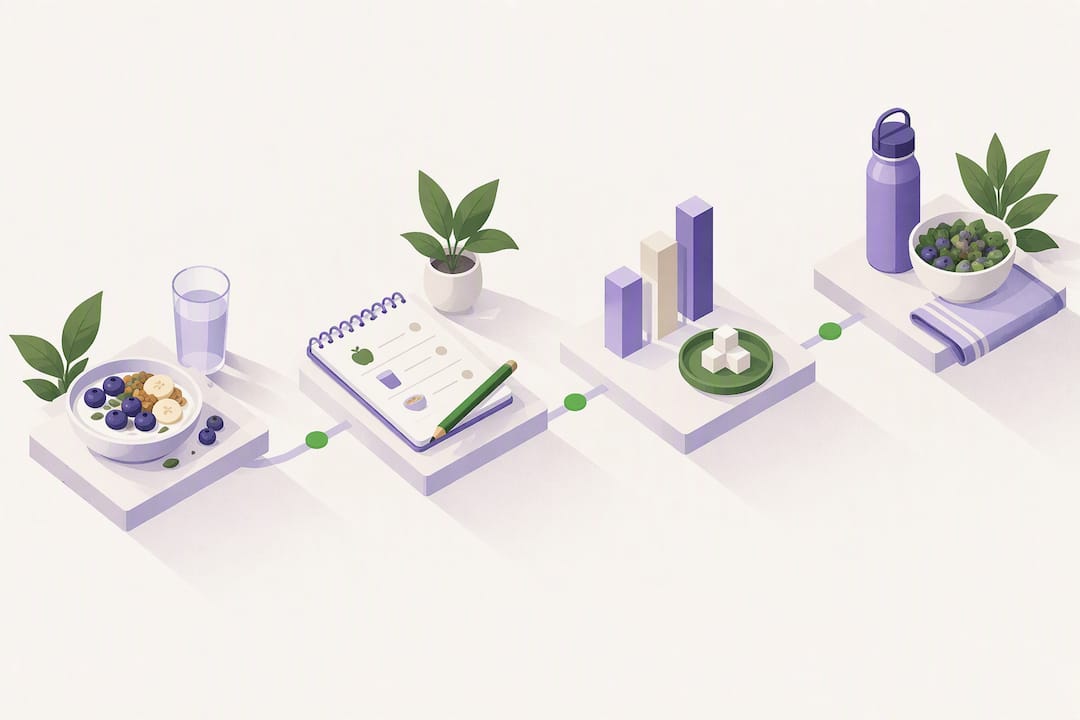
The fastest way to track sugar intake is to set an added-sugar budget and log what you eat with a sugar-aware app or a quick daily tally. Health authorities point to roughly 25 grams of added sugar a day for women and 36 grams for men, and the World Health Organization suggests staying under 10% of your daily calories from free sugars. Below, we walk through the methods, the numbers, and a workflow you can start today.
TL;DR:
- App-based logging provides the most accurate tracking if a database like USDA FoodData Central is used for reliable sugar information.
- A daily sugar target of 25 grams for women and 36 grams for men aligns with health guidelines, with the WHO recommending staying under 10% of total calories from free sugars.
- Manual tracking with a simple tally is less precise but suitable for those seeking a lightweight habit, while source counting focuses on limiting sugary items rather than exact grams.
- The routine of selecting a target, choosing a method, logging food, and adjusting consumption takes under five minutes and encourages pattern recognition over perfection.
- Food tracking should be complemented by awareness of symptoms and professional advice for high blood sugar concerns, as no food can directly cancel out sugar traces.
Log meals by photo, voice, text, barcode or manual entry, then review calories and macros against your personal goal.
Get the AppWhich methods actually work for tracking sugar
Three approaches cover most people’s needs, and the right one depends on how much precision you want.
App-based logging is the most accurate option because it pulls nutrition data from standardized databases rather than guesswork. You snap a photo, scan a barcode, or type in a food, and the app returns grams of sugar along with calories and macros. The accuracy of this method depends entirely on the database behind it: tools built on USDA FoodData Central tend to give more reliable sugar figures than apps relying on crowd-sourced entries.
A manual sugar budget works for people who want something simpler. You pick a daily gram or teaspoon limit, then subtract as you go, writing numbers on a sticky note or in a phone memo. It is faster to set up but rougher, since you’re estimating rather than pulling exact label data for every item.
The “count sugar sources” approach skips grams entirely. Instead of chasing exact numbers, you count how many sugary items you consumed, a sweetened coffee, a dessert, a soda, and aim to keep that count low. This sustainable habit-based method avoids the fatigue that comes from obsessing over every gram.
A few practical notes on choosing between them:
- App logging suits people who want precise daily totals and trend data over time.
- Manual tallying suits people who want a lightweight habit with minimal setup.
- Source counting suits people who abandon tracking when it feels like homework.
One caution: continuous glucose monitors and blood-sugar testing belong to clinical care, not general sugar tracking. If you’re managing diabetes or suspect a blood-sugar issue, talk to a doctor before relying on a device instead of professional monitoring.
What the daily sugar numbers actually mean
The American Heart Association recommends limiting added sugars to about 25 grams, roughly 6 teaspoons, per day for women and 36 grams, about 9 teaspoons, for men. These targets correspond to a moderate daily calorie amount from added sugar for women and men, respectively, a useful anchor when you’re staring at a label and trying to decide if a snack fits your day.
The WHO guidance frames the same idea differently: keep free sugars under 10% of total energy intake, with additional benefits if you get below 5%, which works out to about 25 grams a day for most adults. That 5% figure is conditional, tied mainly to dental health and weight outcomes, not a hard requirement for everyone.
Added sugar and total sugar are not the same thing. Total sugar includes natural sugars in fruit and dairy, while added sugar is what’s mixed in during processing or at the table, and it’s added sugar that these targets track. On a 2,000 calorie diet, the FDA’s Daily Value for added sugars is 50 grams, which represents 10% of calories, a looser ceiling than the AHA’s gram targets but a reasonable starting point if you want one simple number.
Pick whichever framing fits your priorities: AHA grams if you want precision, WHO percentages if you think in calories, or the FDA’s 50-gram Daily Value if you want the simplest single number to watch.
A four-step routine for tracking sugar every day
You don’t need a complicated system, just a repeatable one. Here’s a routine that takes under five minutes a day once it’s set up.
- Pick your number. Choose a daily target: 25 grams, 36 grams, or the 50-gram FDA Daily Value, depending on your sex and priorities from the section above.
- Choose your method. Set up quick-entry favorites in a logging app for your regular foods, or create a one-line paper tally with your target written at the top.
- Log as you go. Scan barcodes for packaged items, snap photos for meals, and make quick estimates for homemade or restaurant dishes where exact figures aren’t available. Saved favorites speed up repeat entries so you’re not retyping your morning coffee every day.
- Check your balance and adjust. Look at your remaining budget by midday and again in the evening, then make swaps where needed: unsweetened iced tea instead of soda, a smaller dessert portion, or a lower-sugar granola bar.
When nutrition information isn’t available, like a homemade sauce or a restaurant dish, estimate using the closest comparable packaged item and round up slightly rather than guessing low.
Pro Tip: Build your five most common breakfast and drink choices into app favorites first. That’s usually where the fastest time savings show up.
Watch for warning signs that go beyond normal tracking. The Mayo Clinic lists increased thirst, frequent urination, fatigue, and blurred vision as common symptoms of high blood sugar, and notes that some people show few symptoms at all, which is exactly why food tracking and, when appropriate, clinical testing both matter. If you notice these signs, that’s a conversation for a doctor, not an adjustment to make with an app alone.
Why data quality matters more than people think
Sugar tracking is only as good as the numbers behind it. Grams of sugar on a packaged label are standardized, but once you start estimating homemade meals or restaurant dishes, accuracy depends on the database an app draws from.
This is where USDA FoodData Central matters: it’s the reference dataset that underlies reliable calorie and macro figures, and sugar grams pulled from it hold up better than estimates from inconsistent, user-submitted entries.
A practical example: say you log a sweetened iced coffee by photo. A sugar-aware app built on USDA data records the grams of added sugar in that drink, subtracts it from your daily target, and updates your running balance. Over a week, that single habit shows up as a trend line, letting you see whether sweetened drinks are your main sugar source before you even look at dessert.
AI photo logging, barcode scanning, and voice, text, and manual entry feed into this same workflow, pulling calorie and macro data, including sugar, from USDA-based sources and tracking a daily balance against your personal goal. Features worth knowing about:
- AI photo logging estimates a meal’s nutrition from a single picture.
- Barcode scanning pulls exact figures for packaged foods in seconds.
- Together mode lets a partner or friend follow your logging for shared accountability.
Awareness beats perfection
The people who stick with sugar tracking are the ones who focus on patterns, not perfect gram counts. Counting how often sugary items show up, rather than chasing exact decimals, keeps the habit light enough to survive a busy week.
Start with your highest-impact categories: sweetened drinks, desserts, and flavored coffee tend to account for most added sugar in a typical day. Fixing those first gets you most of the benefit fastest. Pair tracking with regular movement, since physical activity helps your body use glucose, and loop in a doctor if you have specific blood-sugar concerns.
Putting the routine into an app that does the math for you
Tracking sugar by hand works, but it takes willpower to keep up every single day. We built Cibo so that part of the routine happens automatically: log a meal by photo, barcode, voice, text, or manual entry, and we pull calories, protein, carbs, and fat from USDA-based data, then show your daily balance against your own goal.
That daily balance is exactly the budget-tracking step from the workflow above, updated in real time instead of at the end of the day. Together mode lets you track alongside a partner or friend, which helps on the days motivation runs low. A few ways this maps to what you just read:
- AI photo logging replaces manual estimating for most meals.
- Barcode scanning gives exact sugar grams for packaged snacks and drinks.
- Daily balance shows your remaining sugar budget at a glance, not just at day’s end.
The app works on a 7-day trial, then subscription, on both iOS and Android. If the workflow above sounds like something you’d rather not track on paper, see how Cibo handles it.
This article is general information, not a substitute for advice from a qualified doctor. Consult a qualified healthcare professional about your own circumstances before acting on anything here.
FAQ
What are signs of too much sugar intake?
Common signs of high blood sugar include increased thirst, frequent urination, fatigue, and blurred vision, according to the Mayo Clinic. Some people show few or no symptoms at all, which is why tracking intake and occasional clinical checks both matter rather than relying on symptoms alone.
What flushes sugar out of your blood?
There’s no food or drink that quickly removes sugar from your bloodstream. The body processes it over time, and physical activity helps your body use glucose more effectively, which is why movement is often paired with dietary changes rather than treated as a separate fix.
Is 20 grams of sugar a day a lot?
For added sugar specifically, 20 grams sits comfortably under both the AHA’s 25-gram target for women and 36-gram target for men, so it’s a reasonable daily amount for most adults. It also falls under the WHO’s conditional under-5%-of-calories guidance for most people eating around 2,000 calories a day.
What cancels out sugar intake?
Nothing “cancels out” sugar once eaten, there’s no food, drink, or supplement that neutralizes it. The most effective approach is prevention: tracking intake against a daily target and making swaps, like choosing unsweetened drinks, before the sugar adds up.
Sources
- What are added sugars, and how can you reduce them in your diet? - Harvard Health
- WHO calls on countries to reduce sugars intake among adults and children
- Added Sugars on the Nutrition Facts Label | FDA
- Hyperglycemia (high blood sugar) - Symptoms and causes - Mayo Clinic
Recommended
Not medical advice. Cibo is a nutrition-awareness tool, not a medical device. Read the full disclaimer.
Build healthier habits with Cibo
Nutrition made simpler for everyday life.


