
Shared Food Diary: How to Track Meals Together
A shared food diary lets partners, friends or family log meals and support each other. Learn what to record, how to set it up and how to avoid pressure.
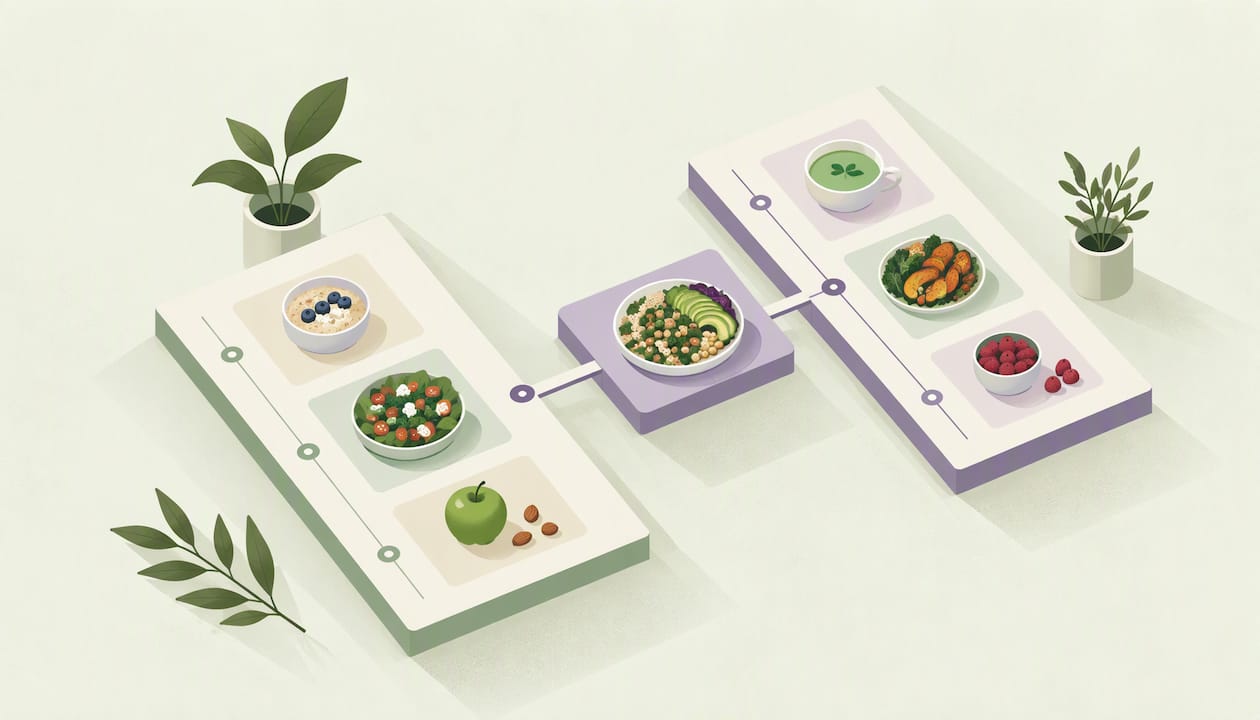
A shared food diary is a meal log that more than one person can see. You and a partner, a friend or your household record what you eat, and each of you can follow the other’s progress. It works best when the sharing is for encouragement, not surveillance. Each person keeps a personal target, you agree on a few things to share, and logging takes seconds instead of minutes.
Below you will find what the research says about shared tracking, what to put in each entry, a step-by-step setup, and how to handle couples, families and privacy.
Log meals by photo, voice, text, barcode or manual entry, then use Together mode to follow each other's progress and offer encouragement.
Get the AppTL;DR
- A shared food diary gives you accountability and timely feedback. It does not guarantee results, and the research on self-monitoring is mixed.
- Keep personal goals separate. Share only a small set of items you both agree on, such as meals, protein and a daily balance.
- Fast logging (photo, voice, barcode, saved meals) matters more than perfect detail, because manual entry is a common reason people quit.
- Treat food logs as personal data. Agree on who sees what, and let anyone step back at any time.
- Review together once a week with supportive questions, not criticism.
What a shared food diary actually is
A traditional food diary is private: you write down meals, drinks and portions so you can see your real intake. A shared version adds a second pair of eyes. That can be a partner who sees your daily totals, a friend who reacts to a lunch photo, or a household where each person has their own profile and a few meals are logged once for everyone.
People search for this under several names: shared calorie tracker, family food diary, shared food tracker. They all describe the same idea. The log becomes a conversation instead of a chore.
It is not one single thing, so decide which type you want:
- Side-by-side tracking: two or more people log separately and can see each other’s progress. Good for couples and friends with different goals.
- Household meals: one person logs a shared dinner and everyone copies it into their own diary with their own portion.
- Supervised sharing: you share your log with a professional, such as a dietitian or doctor, who reviews it with you.
The last one has support in research. A U.S. AHRQ final report on sharing lifelog data found that some patients used shared tracking to check their progress and hold themselves accountable, while others wanted to pass tracked data to their care team.
Why sharing a diary can help
Logging is simple in theory and hard to keep up in practice. Sharing adds two things that a private log lacks: someone who notices, and someone to cheer.
Here is what the evidence supports, and what it does not.
- Self-monitoring is linked to better outcomes in many studies. A 2021 systematic review by Raber and colleagues found that 12 of 18 studies of adherence and weight loss reported a significant positive relationship, while 6 did not. The authors also cautioned that self-monitoring cannot be cleanly separated from other parts of a program. So treat it as a useful habit, not a promise.
- Adherence drops over time. The same review notes that people often stop. A 2026 scoping review of calorie-counting apps reported that manual entry was a barrier and that adherence commonly declined.
- Peer feedback is rare unless you ask for it. In a 2014 JMIR study of 189,770 users of a photo-based diet app, only 2.58% were classified as active users. Just 3.83% of pictures received comments and 15.39% received likes. Active users were more likely to get at least one comment or like. The authors suggested goal setting and intention formation might help people keep going.
The takeaway is practical. Sharing helps only if someone actually responds. A partner who reacts to your log every few days does more than a public feed nobody reads. That is why agreeing on check-ins matters more than picking a platform.
What to record in each entry
More detail is not always better. But a handful of fields make a diary useful, for you and for anyone reading it. The U.S. National Cancer Institute’s ASA24 overview describes a food record that can capture:
- the type and time of the eating occasion
- foods and drinks
- supplements
- recipes
- portion size, using images
- location and eating companions
- context such as watching television or using a computer
You do not need all of that. For a shared diary aimed at nutrition goals, start with this short list:
- What and roughly how much. A photo or a quick description is enough.
- When. Meal slot and time reveal patterns like late snacking.
- Calories, protein, carbs and fat. Use values from a trusted database. USDA FoodData Central is the standard U.S. reference for nutrient data.
- A short note. “Ate out,” “skipped breakfast,” “big workout.” One line gives your partner context so they respond kindly.
The eating companions field is worth a mention. If you share meals with a partner, noting that explains why two logs look alike and helps you spot the days you eat differently.
Portion anchors that make quick logging easier
When you cannot weigh food, use visual cues. A palm is roughly one protein serving. A deck of cards is about 3 oz of cooked meat. A cupped hand holds about a serving of grains or fruit. These are estimates, not lab measurements, so use them to stay close and adjust when you can weigh.
How to set up a shared food diary in five steps
The NCI’s ASA24 design offers a sensible sequence: list the eating occasion first, add foods and portions, review for gaps and forgotten items, and save recipes for reuse. Here is that logic turned into a routine for two or more people.
- Pick one tool and one goal each. Everyone should be in the same app or document. Write down each person’s target separately: one of you may be cutting, another building muscle.
- Agree on what is shared. A good starting set is meals, daily protein and the day’s balance against goal. Body weight, mood notes and slip-ups stay private unless someone chooses otherwise.
- Log in the moment. Record each meal right after eating. Waiting until evening is where snacks and drinks get forgotten.
- Save what repeats. Your usual breakfast, your lunch rotation and the dinner you cook weekly should be one tap each. The ASA24 tool lets recipes be saved and modified for later records, and the principle applies to any tracker.
- Hold a weekly check-in. Ten minutes on the same day each week. Look at the patterns, pick one change, and move on.
Include weekends
A 12-week randomized trial from South Korea asked participants to record food and supplements on at least 20 days, covering weekdays and weekends, and sent monthly encouragement. App and paper groups did not differ significantly in weight or BMI change. Two lessons follow: the method matters less than the habit, and weekends should be in the picture, because that is often where eating changes.
Using a shared diary as a couple or with friends without pressure
The biggest risk of a shared calorie tracker is that it turns into monitoring. Nobody wants to feel graded on a bagel. These rules keep it supportive.
- Separate targets. Your partner’s calorie goal is not yours. Seeing two different numbers should feel normal.
- Comment on effort, not totals. “You logged every day this week” is encouragement. “You went over again” is not.
- Ask before you react. If you see something that worries you, ask how the person feels about their day before offering an opinion.
- Give each person a pause button. Anyone can hide entries or skip logging for a day, no explanation needed.
- Skip the guarantee. Research links better adherence with weight loss in many but not all studies, so avoid telling each other that logging means results.
This fits what the AHRQ report points toward: sharing used for timely feedback and self-regulation, not scorekeeping.
When feedback needs a professional
If your goals involve a medical condition, a history of disordered eating, pregnancy or medication, a partner’s encouragement is not a substitute for clinical advice. Bring your log to a doctor or registered dietitian. If you want follow-up from a licensed professional online, a nutrition follow-up consultation is one way people in Ireland get ongoing feedback on their plan. In the U.S., ask your primary care provider for a dietitian referral.
A family food diary: different ages, diets and portions
Households are harder than couples because one table may feed a toddler, a teenager and two adults with different needs. A few principles help:
- One profile per person. Separate goals and portions prevent the whole family eating to one adult’s target.
- Log the meal once, scale the portion. Cook once, then each person records their own serving.
- Let kids join, gently. The WHO European Region’s 2021 childhood obesity surveillance guidance describes a voluntary family record completed by parents or caregivers, potentially with the child, and recommends informing families and getting consent. That is a surveillance program, not a home routine, but the spirit applies: it is voluntary and the family knows what is being recorded.
- Do not put children on calorie targets. Questions about a child’s weight or growth belong with a pediatrician.
For most families, the most useful shared items are dinners, snacks and drinks, not every bite each person eats.
Privacy and consent checks before you share
Food logs reveal more than you think: health habits, schedules, even conditions. Before you invite anyone:
- Decide who sees what. Partners, friends and relatives can have different access.
- Get explicit agreement. If you are logging for someone else, such as an older relative, ask first.
- Check how the tool protects data. For comparison, the NCI’s ASA24 system uses study-specific user IDs instead of personally identifying data, encrypts data in transit and limits access to study staff, according to its security overview. Look for similar basics in any app you use.
- Know your rights if you are in Europe. A 2019 analysis of GDPR and personalised nutrition explains that dietary preferences and health-related measures can count as personal or special-category data, and that consent must be explicit, informed, precise and withdrawable.
- Keep an exit. Anyone should be able to stop sharing and delete their data.
Our perspective
We build a nutrition tracker, so we see the same pattern again and again: people do not quit because they stop caring. They quit because logging takes too long. The research agrees. Calorie-counting app reviews point to personalization, automation and minimal effort as what makes tracking acceptable, and manual entry as a common barrier.
That is why we think a shared diary should be built around speed first and sharing second. If a meal takes five seconds to log by photo, voice, text or barcode, you will do it on a busy Tuesday. If your partner can see the daily balance without any extra work, support becomes natural. If it takes a spreadsheet, it fades by week three.
We also think precision matters. A shared number only motivates if you trust it, which is why calories and macros should rest on USDA data and not guesses. And we think sharing should stay light: a few visible items, personal goals, kind check-ins. Nobody should feel watched.
Track together in Cibo
If you want a tracker built around this idea, Cibo lets you log meals by photo, voice, text, barcode or manual entry. You get calories, protein, carbs and fat based on USDA FoodData Central, plus your daily balance against a personal goal. Together mode lets partners and friends follow each other’s progress and cheer each other on, while each person keeps their own target. You can read how it works on the Together page.
Cibo is available on iOS and Android with a 7-day trial, then subscription: Cibo Premium is $39.99 per year on both platforms, or $6.99 per month on iOS and $4.99 per month on Android. See the current plans before you decide.
Keeping the habit going past week three
Adherence is the real challenge, so plan for it from the start. The research suggests several levers: reduce entry time, reuse foods and recipes, automate where possible, set modest routines and use supportive rather than judgmental feedback.
- Lower the bar on bad days. Logging a photo and nothing else beats skipping the day.
- Reuse everything. Repeat meals are most of what you eat. Save them.
- Pair the log with an existing habit. Open the app when you sit down to eat, not after.
- Celebrate consistency. Days logged is a better shared metric than pounds lost.
- Look back, not just forward. Photo logs can be reviewed together to spot patterns. In the Foodprint study, 17 people with healthy-eating goals and 16 people with IBS used lightweight photo diaries and collaborative visual review with health experts to build individualized, actionable plans.
- Pick a tool you will open. A 2019 review of smartphone diet-tracking apps found substantial variation in features, so test one before committing.
And if you want more detail on specific routines, our guides on tracking calories without a database and using real-time nutrition insights walk through them step by step.
FAQ
Is a shared food diary the same as a family food diary?
Not quite. A shared food diary is any log that others can see, whether that is one partner or a group of friends. A family food diary is a household version, usually with one profile per person and some meals logged once and scaled to each portion. The principles of agreed sharing and separate goals are the same.
Does sharing my food log help me stay on track?
It can, mostly through accountability and timely feedback. Research on self-monitoring shows a positive link with weight loss in many studies, but not all, and adherence tends to decline over time. Sharing helps most when someone actually responds, so schedule a short weekly check-in.
What should my partner and I share?
Start small: meals, daily protein and the daily balance against each person’s own goal. Keep weight, mood and private notes optional. Agree on this together and revisit it after a few weeks.
Is it safe to share food logs with others?
Food logs can reveal health information, so share only with people you trust and only what you are comfortable with. Check that any app lets you control who sees what and lets you stop sharing or delete your data. If you have a medical condition or a history of disordered eating, talk to a doctor or dietitian before starting.
Sources
- AHRQ final report: sharing patient lifelog data with the primary care team
- NCI ASA24 overview of respondent websites
- Systematic review of dietary self-monitoring (Raber et al.)
- Scoping review of calorie-counting apps
- JMIR: factors related to active use of a photo diet app
- 12-week randomized trial of dietary self-monitoring
- Foodprint photo diary study
- Focused review of smartphone diet-tracking apps
- WHO European Region COSI data collection procedures
- GDPR and personalised nutrition
- USDA FoodData Central
- Nutrition follow-up consultation
Recommended
Not medical advice. Cibo is a nutrition-awareness tool, not a medical device. Read the full disclaimer.
Build healthier habits with Cibo
Nutrition made simpler for everyday life.


