
Track Fiber Intake for 2 Weeks With USDA Data and Symptom Tags
Track fiber intake with USDA food values, weigh portions for accurate recipe estimates, and use symptom notes to monitor tolerance as you increase fiber.
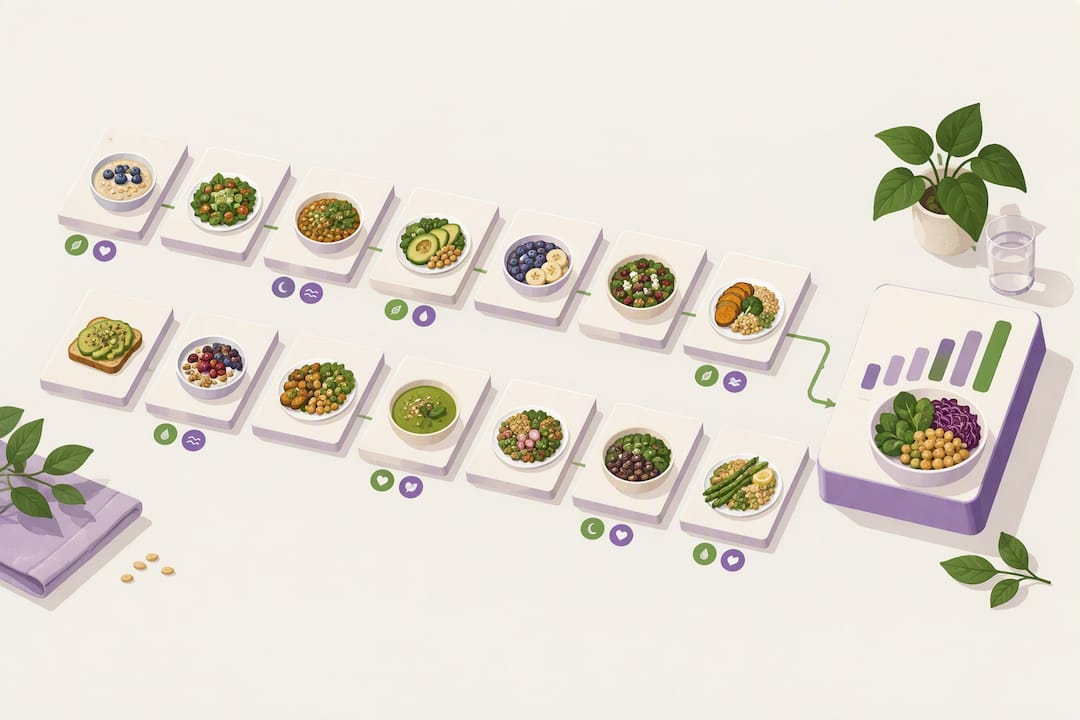
To track fiber intake, log every meal and snack for two weeks and compare your daily and weekly fiber grams against a personal target: 25 grams a day for women, 38 grams for men, or 14 grams per 1,000 calories you eat. That two-week window matters because fiber intake swings a lot of day to day, and a short baseline gives you a real number to work from instead of a guess. An app with USDA-sourced nutrient data, like Cibo, makes this far easier than reading labels alone.
TL;DR:
- Log every meal and snack for two weeks, then use the average rather than a single day to establish your actual baseline.
- For packaged foods, scale label fiber to your measured portion; for homemade recipes, total ingredient fiber and divide it by the servings made.
- Increase fiber by 2 to 3 grams every few days and drink more water to reduce bloating, gas, and other digestive discomfort.
- People with IBS or restrictive diets should consult a doctor or registered dietitian before making significant changes to fiber intake.
Cibo lets you log meals by photo, voice, text, barcode, or manual entry, with nutrient data based on USDA FoodData Central.
Get the AppA compact daily routine for logging fiber accurately
Fiber tracking only works if it becomes a habit rather than an occasional project. The routine below takes a few minutes a day once you get the rhythm down.
- Set a daily fiber goal in your tracking app and make sure fiber shows up as a tracked nutrient, not just calories and protein.
- Log every eating occasion, including snacks, using whatever input is fastest for you: a photo, a voice note, a text description, a barcode scan, or manual entry.
- Confirm portion weights when you can. A cereal bowl eyeballed as “one serving” is often 1.5 to 2 times the labeled amount.
- Weigh ingredients or use clear serving conversions (a cup, a tablespoon, a palm-sized portion) so your logged fiber matches what you actually ate.
- Review your daily total each evening, then after two weeks, calculate your average. That number is your real baseline, not what you assumed you were eating.
Pro Tip: Log meals right after you eat them instead of at the end of the day. Memory-based logging tends to undercount vegetables and whole grains, the two biggest fiber contributors.
Reading labels and recipes for accurate fiber numbers
Packaged foods and home-cooked meals need slightly different approaches to get fiber grams right.
- Check the Nutrition Facts panel for grams of fiber per declared serving, then scale that number to match your actual portion.
- When your portion differs from the label’s serving size, calculate by weight rather than guessing: if the label serving is 28 grams and you ate 50 grams, multiply the fiber grams by 50/28.
- For homemade recipes, weigh raw ingredients before cooking, add up total fiber using USDA FoodData Central values, then divide by the final number of servings the recipe yields.
- Save recurring recipes once you’ve calculated them so you aren’t redoing the math every time you cook the same soup or grain bowl.
This method turns a one-time calculation into a repeatable number you can trust every time you make that dish again.
Which app features actually matter for fiber tracking
Not every nutrition app treats fiber the same way, and the differences show up fast once you start tracking daily.
- Look for apps that pull whole-food values from USDA FoodData Central or another verified database rather than crowd-sourced entries, which are prone to errors on fiber specifically.
- Barcode scanning, portion-weight entry, and a recipe builder save time on packaged foods and homemade meals alike.
- Daily and weekly charts let you spot trends instead of reacting to one high or low day.
- Favorites and recent items speed up logging for foods you eat often, which keeps the habit from feeling tedious.
- Syncing with Apple Health or Google Health Connect consolidates your fiber data with the rest of your activity and nutrition history, so you’re not checking multiple apps to see the full picture.
Low-friction input methods matter more than they seem. If logging a snack takes 90 seconds instead of 10, you’ll skip it on busy days, and skipped entries quietly wreck your baseline average.
What the numbers mean once you’re tracking them
The commonly cited adequate intake for fiber is 25 grams a day for women and 38 grams for men, or about 14 grams per 1,000 calories consumed. The Daily Value used on food labels is set at roughly 28 grams per 2,000-calorie diet, which is a useful rough anchor if you’re not calculating a personalized calorie-based target.
Once you have two weeks of data, calculate your average rather than reacting to any single day. A weekly average smooths out the days when you ate out, skipped vegetables, or had an unusually high-fiber meal, giving you a more honest sense of where you actually stand.
Between 2017 and 2020, the average American adult ate about 17 grams of fiber a day, roughly 40% short of the low end of the recommended range, and about 94% of adults and children fell short of adequate intake. If your baseline lands anywhere near that number, you’re in common company, and it gives you a clear, specific gap to close rather than a vague sense that you “probably don’t eat enough fiber.”
How to increase fiber safely while you track it
Once you know your baseline, raise it gradually rather than jumping straight to the target.
- Increase fiber by about 2 to 3 grams every few days rather than adding 15 grams overnight, which commonly causes bloating and gas.
- Drink more water as you add fiber. Fiber absorbs water in your gut, and without enough fluid, increases can cause the exact discomfort you’re trying to avoid.
- Favor a variety of sources, fruits, vegetables, legumes, and whole grains, rather than relying on one fiber supplement or fortified product. Fiber diversity also feeds a wider range of gut bacteria, which plays its own role in digestive comfort.
- Log symptoms like bloating, gas, or changes in stool form alongside your fiber grams. Patterns usually show up within a few days and tell you whether to hold steady or keep increasing.
Pro Tip: If you’re following a restrictive diet or managing a digestive condition like IBS, talk with a doctor or registered dietitian before making significant changes to your fiber intake.
How an evidence-driven tracker like Cibo fits this workflow
Cibo applies these steps directly. We pull nutrient data, including fiber, from USDA sources, and we let you log meals however is fastest: AI photo logging, voice, text, barcode, or manual entry. Each entry rolls into a daily balance against your personal goal, so your two-week average is calculated automatically instead of by hand.
A simple workflow: set your fiber goal, log meals as you go, check your daily and weekly averages, and note symptoms as you increase intake. Together mode lets you track alongside a partner or friend if you’re both working on the same goal, available on iOS and Android.
What dietary fiber actually is: soluble vs insoluble
Dietary fiber is the part of plant food your body can’t fully digest. It comes in two forms, and most high-fiber foods contain a mix of both.
Soluble fiber dissolves in water and forms a gel-like substance in your gut. It’s found in oats, beans, apples, and citrus fruits, and it’s commonly associated with helping manage blood sugar and cholesterol levels. Insoluble fiber doesn’t dissolve and instead adds bulk to stool, helping move food through your digestive tract. Whole wheat, nuts, and the skins of many fruits and vegetables are good sources.
You don’t need to track the two types separately for general wellness goals. Most nutrition labels and tracking apps report total fiber as a single number, and eating a variety of plant foods, vegetables, whole grains, legumes, fruit, naturally gives you both types without extra math. The distinction matters mostly if a clinician has recommended focusing on one type for a specific digestive issue, in which case a registered dietitian can help you identify foods that lean soluble or insoluble.
Common high-fiber foods worth building your plate around
A short list of reliable sources makes logging faster because you’ll recognize their approximate fiber content without checking every time.
Legumes rank among the highest: lentils, black beans, and chickpeas often carry 7 to 8 grams of fiber per cooked cup. Whole grains like oats, quinoa, and barley add several grams per serving, more than their refined counterparts. Vegetables such as broccoli, Brussels sprouts, and artichokes are fiber-dense relative to their calorie count, and fruits like raspberries, pears, and apples (with skin) contribute meaningful amounts, especially when eaten whole rather than juiced. Nuts and seeds, particularly chia and flaxseed, pack fiber into small portions.
Building a few of these into daily meals, a cup of lentil soup at lunch, berries with breakfast, raises your baseline without requiring you to overhaul your entire diet at once.
Practical steps to record fiber intake day to day
The actual mechanics of logging come down to three data sources: apps, food labels, and USDA FoodData Central.
For packaged foods, the Nutrition Facts label is your fastest reference, scanned via barcode in most apps or read directly. For whole foods without a label, like a banana or a cup of cooked broccoli, USDA FoodData Central gives you a verified fiber value you can enter manually or trust when an app pulls from that database automatically. For homemade dishes, the recipe-yield method works best: add up fiber from raw ingredients using USDA data, then divide by the number of servings the recipe makes.
A common accuracy issue is mismatched serving sizes, logging “one serving” when you actually ate one and a half. Checking the labeled serving weight against what you measured or weighed closes that gap quickly.
Use tracking as a trend tool, not a perfection test
Two weeks of data should show you a trend, not a scoreboard. Watch your weekly average move upward over time, and pair it with physical cues like regularity and stool consistency rather than chasing an exact gram count every day. If you manage a digestive condition, loop in a dietitian or clinician before making major changes.
Try Cibo to put this tracking system into practice
We built this calorie and macro tracker so this entire workflow takes seconds, not spreadsheets. Log a meal by photo, voice, barcode, or text, and it calculates calories, protein, carbs, fat, and fiber from USDA-sourced data, then shows your daily balance against your personal goal.
| Step | What you do | What Cibo handles |
|---|---|---|
| Set a goal | Choose your daily fiber target | Tracks progress against it automatically |
| Log meals | Snap a photo or scan a barcode | Pulls USDA-based fiber grams |
| Review trends | Check in weekly | Calculates daily and weekly averages |
Start with a 7-day trial, then subscription, and see your real fiber baseline within two weeks at Cibo.
FAQ
How do I meet 25 grams of fiber a day?
Build meals around legumes, whole grains, and vegetables, since a single cup of lentils or black beans can supply 7 to 8 grams on its own. Logging meals in an app for a couple of weeks shows you exactly which meals fall short, making it easier to adjust specific meals rather than guessing at your whole day.
How do I measure my fiber intake?
Read Nutrition Facts labels for packaged foods and adjust the fiber grams to match your actual portion size, or use USDA FoodData Central values for whole foods without a label. A tracking app that sources from USDA data does this calculation automatically once you log a photo, barcode, or manual entry.
How can I hit 38 grams of fiber a day?
Reaching the higher end of the recommended range, 38 grams for men, usually means combining several high-fiber foods across the day rather than relying on one source. Add legumes to lunch, a whole grain at dinner, and fruit or nuts as snacks, increasing gradually by about 2 to 3 grams every few days to avoid digestive discomfort.
Is 20 grams of fiber a day too much?
No, 20 grams a day falls below the recommended range of 25 to 38 grams, so for most adults it’s a reasonable midpoint to build from rather than a number to worry about. The average American adult eats closer to 17 grams a day, so 20 grams already represents progress toward the target.
How long should I track fiber before changing my diet?
Track consistently for about two weeks to establish a reliable baseline average before making significant changes. A single day’s total can swing widely depending on what you ate, so the two-week average gives you a far more dependable starting point.
Sources
- Fibre intake for optimal health: how can healthcare professionals support people to reach dietary recommendations? - PMC
- The Role of Dietary Fiber in Health Promotion and Disease Prevention: A Practical Guide for Clinicians - StatPearls - NCBI Bookshelf
Recommended
Not medical advice. Cibo is a nutrition-awareness tool, not a medical device. Read the full disclaimer.
Build healthier habits with Cibo
Nutrition made simpler for everyday life.


