
How to Build a Food Tracking Habit That Lasts
Build a food tracking habit in small steps: start with one meal, pick a cue, log in seconds, and recover from missed days without guilt.
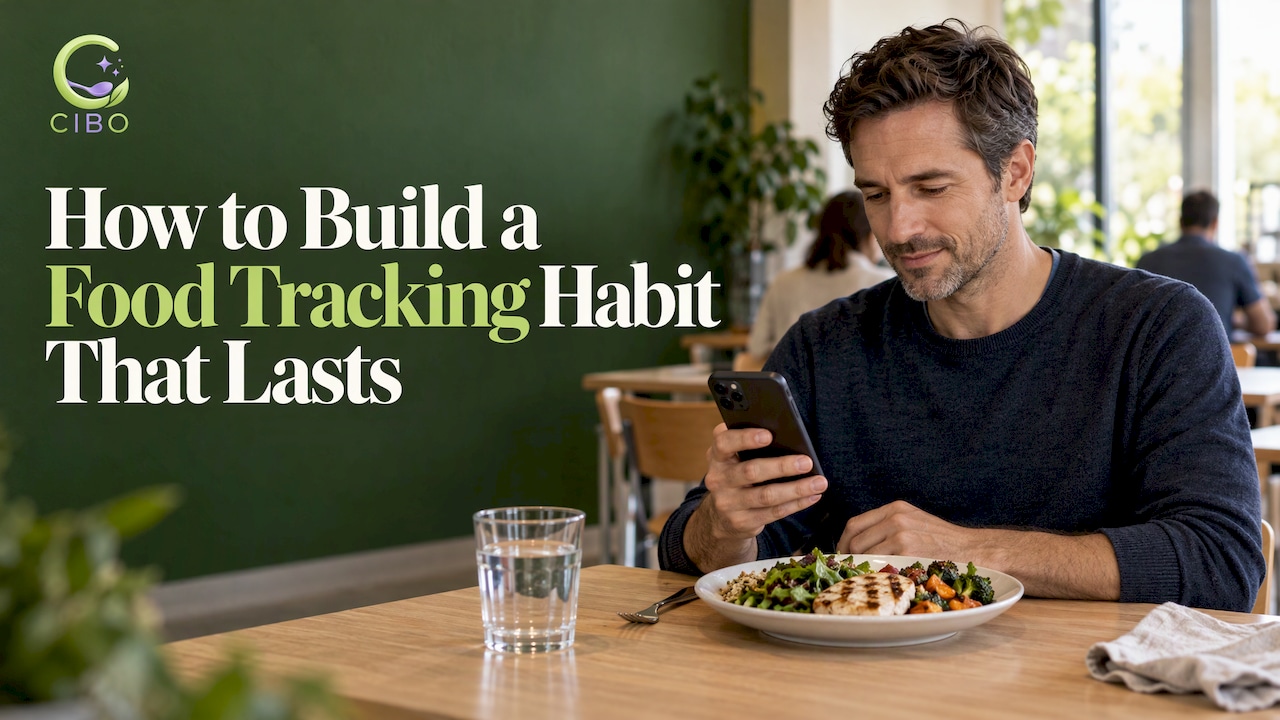
The easiest way to build a tracking habit is to make it small: log one meal a day, at the same moment each day, in the fastest way you have. Add meals once that feels automatic. Missing a day is normal and does not reset anything. What matters is the next entry.
Most people do not quit tracking because they lack willpower. They quit because the first week asks too much: every meal, every gram, every day. This guide shows a gentler path, with a two-week plan, ways to log in seconds, and what to do when life gets in the way.
Log meals by photo, voice, text, barcode, or manual entry, then see your daily calories and macros against a personal goal.
Get the AppTL;DR
- Start with one meal a day, not all of them. Cleveland Clinic suggests recording one meal at a time and building from there.
- Tie logging to something you already do, like sitting down to eat, so you do not rely on remembering.
- Make logging take under 30 seconds: a photo, a voice note, or a barcode scan beats typing from scratch.
- A missed meal or day is data, not failure. Pick up at the next meal.
- Review once a week for patterns. You do not have to track forever.
Why a tracking habit is worth building
Tracking works because it makes your eating visible. A Cleveland Clinic guide to food journaling says that writing down what you eat can support weight management, help you spot foods that trigger problems, and reveal habits so you can eat more mindfully.
There is research behind the routine, too. A 2021 article in ACSM’s Health & Fitness Journal describes self-monitoring as useful because it raises awareness of what you eat, gives immediate feedback, and is more convenient when done in real time. It also reports that in a six-month weight-loss study, logging food on at least five days a week was among the significant predictors of weight loss, next to weigh-ins, steps and high-intensity exercise.
Notice what that finding points to: showing up regularly. Not perfect numbers. Not never missing a meal. The habit itself is the active ingredient, so the habit is what you build first.
How long a habit really takes
You may have heard that habits take 21 days. The best-known study on the question found something messier. In a research digest of the University College London habit study, the average time for a behavior to feel automatic was around two months, and the range between people was very wide. Some people got there far faster, and some took much longer. The same research found that missing a single day did not derail the process.
That is encouraging for tracking. You are not on a 21-day countdown. You are running a long, forgiving experiment where the goal is to make logging feel as ordinary as brushing your teeth. Plan for weeks, not days, and expect some wobbly ones.
Start smaller than feels necessary
The most common mistake is starting with a full-day, every-ingredient, weigh-everything system. It feels responsible on Monday and exhausting by Thursday.
Instead, follow the advice in Cleveland Clinic’s guide: start slowly and record one meal at a time. Medical News Today adds that you should set a health goal before you begin and keep your first focus to a small number of goals. A single goal is plenty. For example:
- Eat enough protein at lunch.
- See what a typical dinner adds up to.
- Notice how much you snack in the evening.
Pick the meal where you have the most curiosity or the most uncertainty. Many people choose the meal they find hardest to judge by eye, because the numbers surprise them most and the payoff arrives fast.
Decide what you are tracking and how closely
You do not need to track everything at maximum precision. Cleveland Clinic notes that a food journal can be as specific or as general as your purpose requires. Counting calories is optional, and extra detail only helps if it answers your question.
Here is a simple way to match the detail to the goal:
| Your goal | What to log | Detail level |
|---|---|---|
| Get a sense of your habits | What, when, how much | Rough portions are fine |
| Steady weight loss | Calories, plus protein | Photo or scan each meal |
| Build muscle | Protein and total calories | Per-meal protein totals |
| Spot patterns with energy or mood | Foods, times, how you felt | Add a short note |
You can always add detail later. Starting with less keeps the habit alive long enough for the detail to matter.
A two-week plan to make it stick
This is a practical ramp. Adjust it to your schedule, but keep the order: easy first, bigger later.
- Days 1 to 3: one meal. Log only the meal you picked. Do not worry about accuracy. The only goal is to open the app or notebook and finish an entry.
- Days 4 to 7: one meal, same cue. Keep the same meal, and attach logging to a trigger: sitting down, picking up your fork, or the moment you finish eating. A cue beats a reminder because it fires on its own.
- Days 8 to 10: add a second meal. Choose the next-easiest one. Breakfast is often the simplest because it repeats.
- Days 11 to 14: add the rest. Log snacks and drinks too. By now, the entry itself should feel quick.
- End of week 2: look back. Spend ten minutes reviewing what you logged. What stands out? What would you change?
If any step feels hard, stay there another few days. Nothing is racing you.
Make logging take seconds, not minutes
Friction is the real enemy. If an entry takes three minutes, you will skip it on a busy day. If it takes ten seconds, you will not.
Both Cleveland Clinic and HealthLink BC recommend recording food as you eat or soon after, because memory fades quickly and we tend to forget the little extras. Cleveland Clinic also suggests taking a quick photo if you cannot write it down right then.
Here are ways to speed things up:
- Photo. Snap the plate before the first bite. Good lighting and a clear view of every item help; our guide to food photo tips for tracking covers angles and what to include.
- Voice. Say “two eggs, one slice of toast with butter, a medium banana” while you walk to the table.
- Barcode. For packaged food, a scan is quicker than searching.
- Repeat meals. If you eat a similar breakfast most days, reuse it instead of rebuilding it.
- Manual entry as the backup. It is slower, but it works anywhere. If you like that style, see how to do manual food logging fast and accurately.
If you are choosing a tool, our guide on how to choose a calorie tracker you will actually stick with walks through what to look for. The short version: the best tracker is the one whose logging method you will still use in month three.
When you cannot measure, estimate
You will eat at restaurants, at friends’ homes, and on the go. Do not skip those meals. HealthLink BC recommends estimating portions with household measures or familiar objects when exact measurements are not possible, and Cleveland Clinic gives fist-sized amounts as an example. A few visual anchors help:
- A palm is roughly one serving of protein.
- A fist is roughly one serving of rice, pasta or fruit.
- A deck of cards is roughly 3 oz of cooked meat.
- A thumb tip is roughly a teaspoon of oil or butter.
An honest estimate is far more useful than a blank. Over a week, small errors tend to even out, and the pattern still shows.
Where the numbers come from
Accuracy matters most when you are counting protein or calories toward a goal, so it helps to know what is behind the figures. The USDA’s FoodData Central is the U.S. government’s food composition data system, covering basic foods through branded products. Our own approach is to estimate calories, protein, carbs and fat from USDA data, which is the idea behind our AI and USDA workflow for tracking without a database.
Anchor logging to your day
A habit sticks when it rides on something that already happens. Try one of these pairings:
- Meal start: phone out, photo taken, then eat.
- Meal end: log while you finish your drink.
- Daily wrap-up: a two-minute check at night to fill any gaps while the day is fresh.
Pick one and keep it for at least two weeks before you change it. If you work in the evening and tend to forget, use the wrap-up pairing rather than the meal-by-meal one. Either way, aim to be honest rather than flattering. Medical News Today recommends recording honestly instead of relying on memory, because skipping the bites you would rather not count defeats the purpose.
What to do when you miss a meal or a day
You will miss entries. Plan for it now so it does not become a reason to quit.
- Do not backfill from vague memory. Log what you clearly remember, add a rough estimate for the rest, and move on.
- Restart at the next meal. Not tomorrow, not Monday. The next one.
- Shrink the habit for a few days. Go back to one meal a day until it feels easy again.
- Ask what got in the way. Travel, a late night, or an awkward meal? Fix that one thing.
HealthLink BC frames journaling as a way to find your eating patterns and make small, achievable changes, and says plainly that it is not meant to create guilt, shame or self-judgment. Treat a gap as information. If every Thursday goes untracked, Thursday is the day to design for.
Review weekly and adjust
The habit has a purpose: understanding your eating well enough to make choices you like. Cleveland Clinic recommends looking back over the week for patterns and notes that journaling does not have to happen every day forever. It also suggests starting again when you feel off track or notice old habits creeping back.
A simple weekly review takes ten minutes:
- Which meals did you log most reliably, and which did you skip?
- Where did protein, calories or snacks drift from what you wanted?
- What is one small change for next week?
For a structured version, try the steps in how to analyze your eating patterns in 7 days, or go deeper with food log analytics. Keep the change small. One swap beats five resolutions.
Build the habit with someone
A partner or friend can make tracking easier, as long as the support feels like support. A WebMD guide on helping a loved one suggests asking what kind of help they want, encouraging effort, listening without judgment, joining in on healthy behaviors, and avoiding criticism or policing of food choices.
Research points the same way. A 2022 study of romantic couples found that autonomy-supportive strategies were linked to healthier eating and more constructive relationship behavior on the days partners reported them, while autonomy-limiting strategies showed no such benefits.
In practice:
- Agree on what you share: only progress and wins, or full entries.
- Celebrate that you logged, not what you ate.
- Never comment on a specific food unless asked.
For ideas on setting it up, see our guide to a shared food diary for tracking meals together.
A simple way to put this into practice
If you want a tracker built around quick logging, Cibo lets you log a meal by photo, voice, text, barcode or manual entry. It returns calories, protein, carbs and fat based on USDA data and shows your daily balance against your own goal. Together mode lets a partner or friend follow along, so you can encourage each other.
Pricing is a 7-day trial, then subscription: Cibo Premium is $39.99 per year on iOS and Android, or $6.99 per month on iOS and $4.99 per month on Android. You can see the current plans on the pricing section of our site.
Common roadblocks and quick fixes
| Roadblock | A small fix |
|---|---|
| “I forget.” | Pair logging with sitting down to eat, or set a nightly wrap-up |
| “It takes too long.” | Use photo, voice or barcode instead of typing |
| “Eating out is a mess.” | Estimate with palm, fist and thumb, and log it anyway |
| “I feel judged by my own numbers.” | Remember the log is for noticing patterns, not scoring yourself |
| “I lost motivation.” | Go back to one meal a day for a week, then rebuild |
| “I am not sure what to track.” | Choose one goal, such as protein at lunch, and log only for that |
FAQ
How long does it take to build a food tracking habit?
There is no fixed number. Habit research found that the time for a behavior to feel automatic varied widely between people, averaging around two months. Aim for consistency over several weeks, and expect it to feel easier long before it feels automatic.
Do I need to log every meal and snack?
No. Cleveland Clinic suggests starting with one meal at a time and letting the detail grow with your purpose. Begin with the meal that teaches you the most, then add others when logging feels routine.
What if I forget to log for a few days?
Restart at your next meal and skip the guilt. Log what you remember, estimate the rest, and shrink back to one meal a day if you need to. A gap shows you where your routine needs support.
Should I track forever?
You do not have to. Cleveland Clinic notes that journaling need not happen every day indefinitely, and that you can return to it when you feel off track. Many people track closely for a stretch, review the patterns, and then check in now and then.
Is it better to track alone or with a partner?
Both work. Tracking with someone can add encouragement, provided it stays supportive and not controlling. Ask what help they want, praise the effort of logging, and leave out commentary about food choices.
If you track because of a medical condition, or you have a history of disordered eating, talk with your doctor or a registered dietitian about whether and how to count food.
Sources
- Food Journaling: What it is, Benefits & Tips, Cleveland Clinic
- Fitness Watches and Nutrition Apps: Behavioral Benefits, ACSM’s Health & Fitness Journal
- Food Journaling: How to Keep Track of What You Eat, HealthLink BC
- How to keep a food journal: Tips, benefits, and more, Medical News Today
- 10 Ways to Help a Loved One Lose Weight, WebMD
- Effects of Social Control on Eating and Relational Behavior, PubMed
- How to form a habit, British Psychological Society Research Digest
- FoodData Central About Us, USDA
Recommended
Not medical advice. Cibo is a nutrition-awareness tool, not a medical device. Read the full disclaimer.
Build healthier habits with Cibo
Nutrition made simpler for everyday life.


