
Hand Portion Method: Measure Your Food With Your Hands
Learn the hand portion method: how palm, fist, cupped hand and thumb map to protein, veggies, carbs and fats, plus tips to make your estimates more accurate.
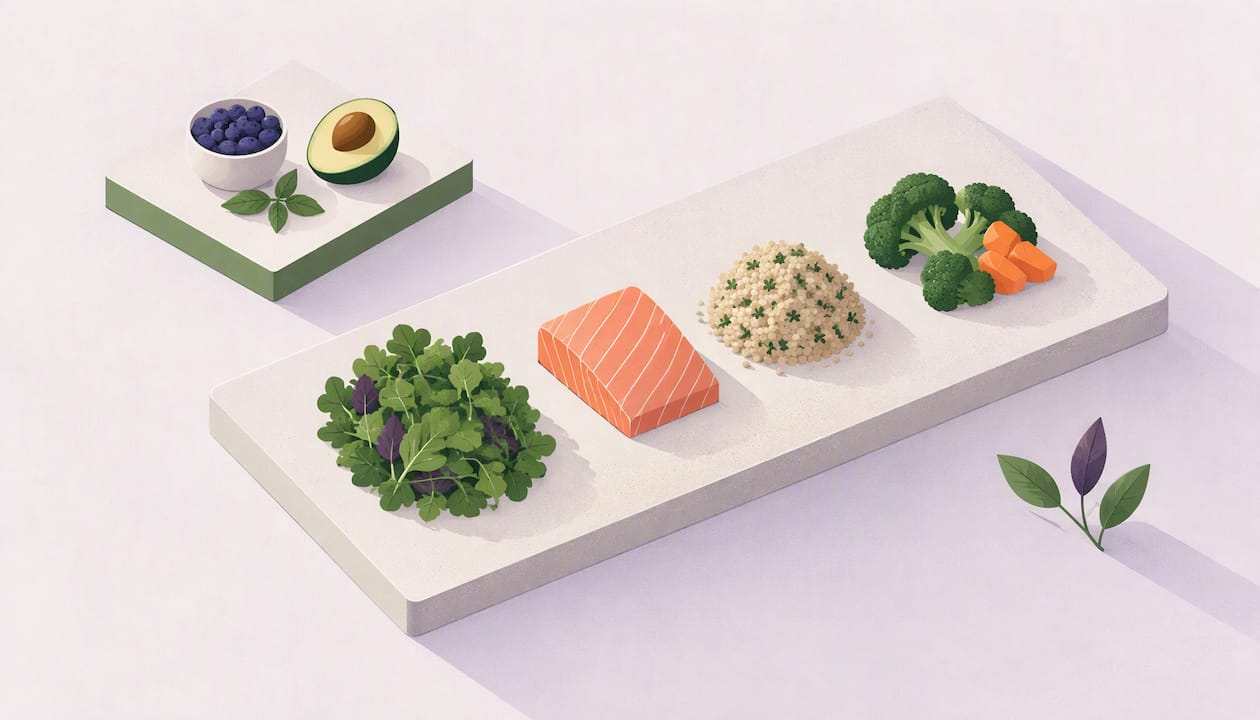
The hand portion method uses your own hand as a measuring tool: your palm for protein, your fist for vegetables, your cupped hand for starchy carbs and your thumb for fats. Your hands go to every meal with you, they scale roughly with your body size, and they need no batteries. This guide shows you exactly how to use each one, where the method works well, where it falls short, and how to tighten it up if you want more precision.
Log meals by photo, voice, text, barcode or manual entry, then see calories and macros against your personal daily goal.
Get the AppTL;DR
- Palm ≈ 3 oz of protein, fist ≈ 1 cup of vegetables, cupped hand ≈ ½ to ⅔ cup of starchy carbs, thumb ≈ 1 tablespoon of fats.
- In a 2025 study of 1,081 adults, hand-based estimates tracked actual intake reasonably well, but grains were the weakest food group.
- Judge foods like rice, pasta and meat the way you eat them: cooked, not raw.
- The method is a starting point. Adjust it to your hunger, activity and goals, and add precise tracking if your goal demands it.
What the hand portion method is
Most of us struggle to picture 3 ounces or 2 tablespoons. A hand is easier to picture because you always have it. The idea is simple: instead of weighing and measuring, you compare what is on your plate to a part of your hand.
Because your hands are generally proportional to your body, the method also scales a little by itself. Precision Nutrition notes that a larger person tends to have larger hands and so ends up with larger portions, which is roughly what you would expect.
The same idea shows up in many public health handouts, such as this Helping Hands sheet from the University of Rhode Island and Unlock Food’s guide to sizing up your portions. The exact comparisons vary slightly from source to source, so treat any chart, including ours, as approximate.
The four hand measures at a glance
Here is the standard framework, based on the Precision Nutrition hand portion guide.
| Hand measure | Food group | Approximate amount |
|---|---|---|
| Palm | Protein-dense foods (meat, fish, tofu, eggs) | About 3 oz (85 to 115 g), roughly 20 to 25 g of protein |
| Fist | Vegetables | About 1 cup (240 mL), roughly 25 kcal |
| Cupped hand | Starchy carbs (rice, pasta, oats, potatoes) | About ½ to ⅔ cup |
| Thumb | Fats (oils, nut butter, butter) | About 1 tablespoon (14 g) |
A quick memory trick, if you like visual anchors: a palm is also close to a deck of cards in size and thickness, which is the classic picture for 3 oz of cooked meat.
A note on the numbers. The palm is a flexible, body-proportional measure, not a lab instrument. For most people it lands close to a 3-ounce serving of protein, in line with USDA serving standards, but it is built for ease, not exactness.
How to use each measure
Palm: protein
Picture the palm without the fingers: the width and length of the hand, with the thickness of your little finger. A piece of chicken, fish or steak that matches that is one protein portion.
- Chicken breast or lean beef: one palm-sized piece, cooked.
- Fish fillet: one palm, though thin fillets may be bigger in surface area.
- Tofu or tempeh: one palm-sized slab.
- Eggs, beans, yogurt: these do not fit the palm neatly. Use a household measure or a label instead.
The palm works best for solid, flat foods. It is clumsy for anything crumbled or mixed.
Fist: vegetables
A closed fist is about 1 cup of vegetables or cut-up fruit. This is helpful because the WHO recommends at least 400 g, or five portions, of fruit and vegetables per day, excluding potatoes, sweet potatoes, cassava and other starchy roots. Counting fists gives you a quick way to check whether your day is on track. One fist at lunch and one or two at dinner, plus a piece of fruit or two, gets you close.
Note that a cup of leafy greens is a lot more volume than a cup of broccoli, but in practice most people undereat vegetables, so do not worry about being exact here. Add a second fist if you are still hungry.
Cupped hand: starchy carbs
Hold your hand in a shallow cup. What it holds, about ½ to ⅔ cup, is one portion of cooked rice, pasta, oats, quinoa, or chopped potatoes. Bread and tortillas are harder, so count them by the slice or by the label.
Thumb: fats
The whole thumb, from tip to base, is about 1 tablespoon of oil, nut butter or butter. This is the measure people forget, and it matters because fats are calorie-dense. Two extra thumbs of olive oil in a pan can add more energy than a whole palm of chicken, so be honest about what went into the cooking.
Other guides use the thumb tip for a teaspoon and the full thumb for a tablespoon. If you are following a different chart, stay with one system rather than mixing them.
How accurate is it?
Honest answer: good enough for most people, not perfect.
A 2025 study of 1,081 free-living adults examined whether the hand scale is an appropriate tool for estimating portions. The correlation between actual consumption and hand-estimated portions ranged from 0.59 to 0.85. By food group, it was 0.59 for grains, 0.72 for protein foods, 0.76 for vegetables and 0.85 for fruit. The authors concluded it is an appropriate, portable tool.
What does that tell you? Fruit and vegetables, which are bulky and have a natural shape, are easiest to judge. Grains are hardest, because a pile of rice can be loose or packed, flat or heaped. If you only tighten one thing, tighten your starch portions.
Earlier research asked the same question from a different angle. A paper in the British Journal of Nutrition, Accuracy of hands v. household measures as portion size estimation aids, compared hands against household measures such as cups and spoons. It is worth a read if you want to see how researchers test these tools, and a reminder that hands are one aid among several, not the only one.
A worked example: building a plate
Let’s build a dinner using the hand method, with typical adult hands in mind.
- Protein: one palm of baked salmon.
- Vegetables: two fists of roasted broccoli and peppers.
- Carbs: one cupped hand of cooked brown rice.
- Fat: one thumb of olive oil used for roasting.
That plate is balanced, easy to repeat and quick to build. You did not need a scale, a measuring cup or an app. The numbers on the nutrition label for each food will vary, so if you want a calorie total, you would look up each item in USDA FoodData Central or log it in a tracker.
Scaling up or down
The standard approach is to start with one palm, one fist, one cupped hand and one thumb per meal, then adjust. A larger or very active person might use two palms and two cupped hands. Someone eating less might use a smaller starch portion or skip the second thumb of fat. As IFIC points out, portion needs depend on you, so use the guide as a starting point and notice how you feel.
Five mistakes that throw off your estimates
- Measuring raw instead of cooked. This is the biggest beginner pitfall. Foods like pasta, rice and meat change size when cooked, so judge them as you eat them. Precision Nutrition stresses that hand portions are for plating your food, not cooking it. Staying consistent matters more than any single meal being exact.
- Heaping the cupped hand. A level, relaxed cup is one portion. A mound is closer to two.
- Forgetting cooking fats and sauces. Oil, dressings and creamy sauces rarely fit in your head as portions. Give them a thumb.
- Using the method for mixed dishes. Curries, casseroles and burritos are hard to break into palms and fists. Estimate the main components, or use another method for them.
- Changing your own reference. Use the same hand, the same shape, every time. Do not pinch, squash or stack to get things to fit.
Where the hand method shines, and where it does not
It shines when:
- You are eating out, at a friend’s house or traveling, and cannot weigh anything.
- You want to build awareness of what a sensible portion looks like.
- You want a light, sustainable habit and not another thing to measure.
- You are aiming for general healthy eating and fruit and vegetable intake.
It struggles when:
- You have a specific physique or performance target and need to hit protein or calorie numbers closely.
- You eat many mixed dishes, snacks or packaged foods.
- You are eating calorie-dense foods like nuts, oils and cheese, where small errors add up fast.
- You have a medical condition such as diabetes or kidney disease. In that case, work with your doctor or a registered dietitian on portions and targets, rather than relying on a general rule of thumb.
Researchers describe hand methods as aids, not replacements for precise measurement, which is a fair way to frame it. Use hands for flexibility, and add something more exact when your goal needs it.
Other portion estimation aids to pair with your hands
Hands are not your only visual shortcut. The US Department of Veterans Affairs lists serving size tips that compare servings to everyday objects, and a USDA nutritive value table includes tips for estimating amounts when you cannot measure or weigh. Combining several cues helps when a hand comparison feels shaky.
- Read the serving size on the label, then compare it to your plate.
- Use a measuring cup now and then for a week to calibrate your eye, then put it away.
- Plate your food before you sit down instead of eating from the package.
- Keep a go-to list of meals you have already portioned once, so you can repeat them.
If you cook at home and want to cut down on guesswork around what you have in the fridge, this practical guide on planning meals without rigid plans can help you build a rhythm that makes consistent portions easier.
Our perspective: consistency beats perfection
At Cibo, we spend our days thinking about how people actually track food, and we have a simple view of the hand method. It is a very good habit-builder and a poor substitute for numbers when numbers matter.
Here is how we think about it:
- Hands teach your eye. A few weeks of palms and fists make you much better at spotting an oversized portion at a restaurant.
- Consistency is the real skill. The method works because you repeat it, not because each meal is exact. Cooked rice measured the same way every day gives you a trend you can learn from.
- Goals change the tool. If you are losing around 10 kg gradually, or building muscle and counting protein, a palm that is 20 percent bigger than you thought adds up over weeks. That is when logging with real numbers earns its place.
- Do not make it stressful. Eating should not feel like an exam. Start with hands, add detail only where it helps.
That is why we built Cibo to sit beside habits like this one: you snap a photo, say what you ate, type it or scan a barcode, and get calories, protein, carbs and fat based on USDA FoodData Central. If you want a gentler way into the numbers first, our guide to counting calories without weighing food shows how far you can get with estimates.
From hand portions to numbers
Once your hands feel natural, you can turn portions into targets in three steps.
- Set your daily goal. Use the macro calculator to see protein, carbs and fat in grams, or browse the nutrition calculators for TDEE and calorie deficit estimates.
- Translate grams into hands. If your protein target is around 100 g and one palm gives you roughly 20 to 25 g, four palms across the day is a sensible rough match. Spread them over meals.
- Check against real data. For occasional spot checks, look up foods with our guide to finding calories in food using USDA data, or learn the full process in how to calculate macros.
If your goal is fat loss, our walkthrough on macros for fat loss shows how to set targets from USDA data. If you cook from scratch, estimating recipe calories takes about ten minutes.
For a broader take on tailoring portions to your needs, this article on personalizing nutritional intake discusses why one size does not fit everyone.
When you want more than hands can give
If you would like numbers without a scale, Cibo is available on iOS and Android. You log a meal by photo, voice, text, barcode or manual entry, and see your daily balance against a personal goal. Together mode lets a partner or friend follow along and cheer you on, which helps if you are both trying to eat more mindfully.
Pricing is a 7-day trial, then subscription: Cibo Pro is $39.99 per year on iOS and Android, or monthly at $6.99 on iOS and $4.99 on Android. See the plans and features or start from the yearly plan page, and read about Together mode if you track with someone else.
FAQ
How big is a palm portion of protein?
A palm, without the fingers, is roughly 3 oz of cooked protein, or about 85 to 115 g, which typically holds around 20 to 25 g of protein. Precision Nutrition describes it as a flexible, body-proportional measure. Larger hands mean slightly larger portions, which is usually what you want.
Should I measure food raw or cooked with my hands?
Cooked, as you plate it. Foods such as rice, pasta and meat change in size during cooking, so a raw handful and a cooked handful are not the same. Pick one habit and stick with it, because consistency matters more than any single meal.
Is the hand portion method accurate enough to lose weight or build muscle?
It can support general healthy eating, and a 2025 study found it to be an appropriate, portable tool. For precise calorie or protein targets, many people add measured or logged data, especially for grains, oils and mixed dishes. If you have a medical condition, ask your doctor or a dietitian to set your targets.
How many fists of vegetables should I eat a day?
A fist is about 1 cup. The WHO suggests at least 400 g of fruit and vegetables daily, or five portions, so aim for several fists spread across meals and snacks. Starchy roots like potatoes do not count toward that total.
Sources
- Hand Portion FAQ, Precision Nutrition
- Is the hand scale an appropriate tool for guiding and estimating food portions? PubMed
- Accuracy of hands v. household measures as portion size estimation aids, PMC
- Healthy diet fact sheet, WHO
- Portion Size Guide: How Much Should You Eat? IFIC
- Helping Hands portion sizes, University of Rhode Island
- Size up Your Food Portions, Unlock Food
- How to Judge Serving Sizes, Veterans Affairs
- Nutritive Value of Foods, USDA
Recommended
Not medical advice. Cibo is a nutrition-awareness tool, not a medical device. Read the full disclaimer.
Build healthier habits with Cibo
Nutrition made simpler for everyday life.


